

How Word-of-Mouth Formed the Fatafat Community
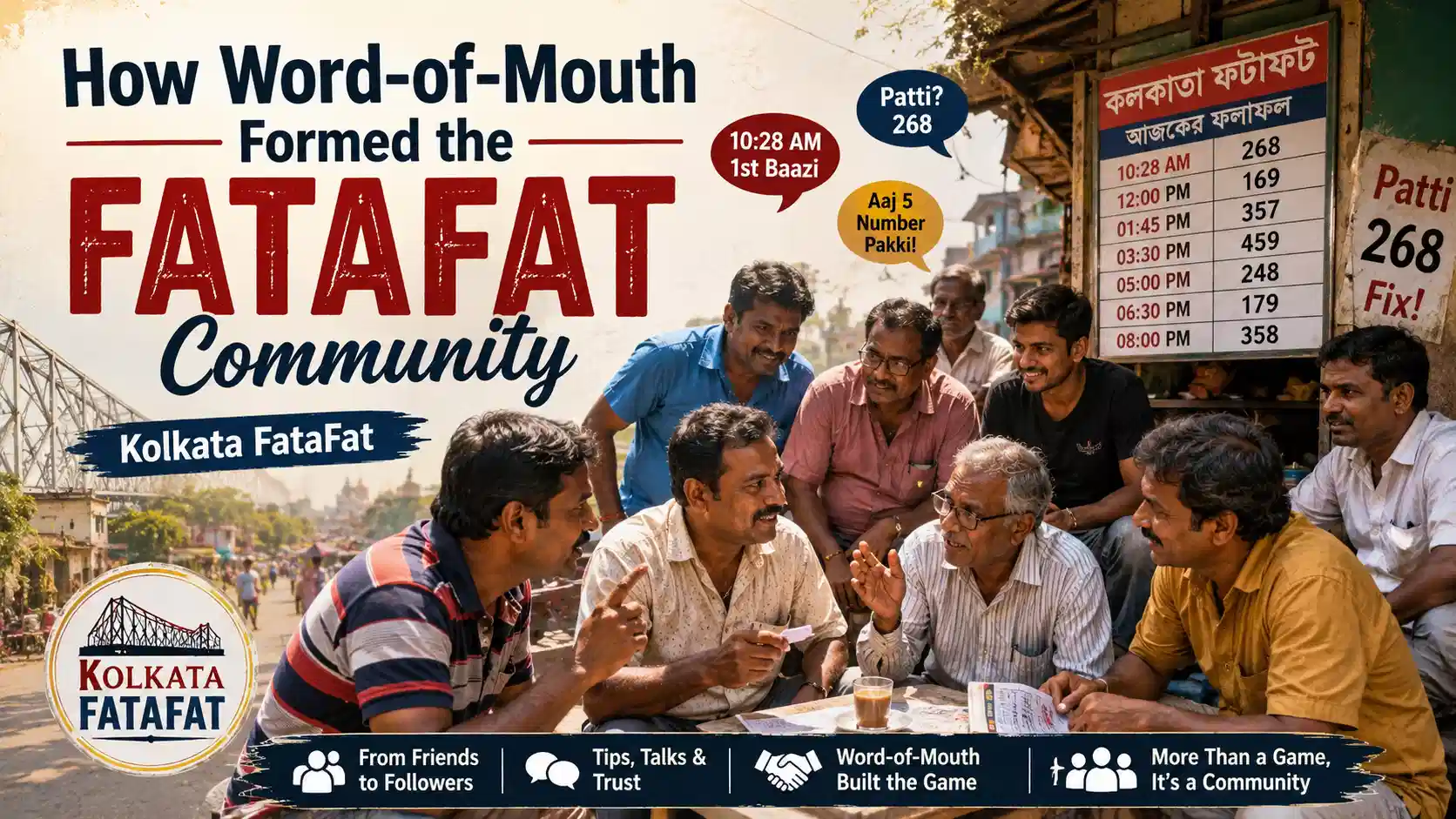
No, the existence of websites like Kolkata Fatafat didn't happen because of some clever marketing strategy and a viral video, it happened the good old fashioned way, one by one, and if we take away all the noise, that is the only thing that is behind all that. Before the emergence of the websites like KolkataFF.net, the whole culture existed through word-of-mouth, local dealers and that one uncle in every para who somehow always knew which patti was "hot" today. In this article I am going to tell you how the most devoted grassroots gaming community in West Bengal was built without any investments into advertising.
Tea stall was the first website
Before the era of Internet, when the result of every baji was reported using the most primitive channels of communications – message at the paan stall, screaming numbers in the streets, crowds of people around the guy who had today's chart. Sometimes, the results could even be announced publicly in some paras. And here comes the irony, the offline community worked faster than any media of that time. If there was 12 PM baji drop, everybody in the neighborhood knew about it in several minutes. No notifications, no push notifications, just human voice spreading the news.
Today's Result Kolkata Fatafat
Trust was created through reputation
One of the things that is usually misunderstood by the people who know nothing about this culture is that the trust was not created by some websites and slogans. The trust was created through reputation. Local dealers who would write down your patti, your cousin's Ghosh babu tipster, the friend who taught you rules of the digit sum – all of those guys were influencers in the community, long before this term would appear.
Ghosh Babu, Goswami Dada and tip culture
Honest speaking, tip culture is the engine of this fatafat community. Names like Ghosh babu and Goswami dada are not brands, but rather more like folk heroes, representing the centuries-long experience of guessing. People do not follow tips blindly, they analyze them, discuss them, share screenshots in the WhatsApp groups and roast each other if the promised number fails. And this is what unites the whole community every single day.
From para chats to WhatsApp groups
The transition to the digital platforms did not stop the engine of word-of-mouth, it just changed the medium. Today, the very same discussions that used to happen in the tea stalls happen in the telegram group which has four thousand members. Websites like KolkataFF.net can provide the information very quickly, but the discussion itself, guesswork, celebration and complaining happen through the peer discussions. The medium changed, but the culture remained the same.
Why it matters for the future
This community was not formed by push notifications and does not unite through any algorithm. It unites through the fact that fatafat became the part of the everyday Kolkata life. Any website or platform which wants to address this audience should respect the history of the community and, basically, it means being quick, providing the accurate results and not making the community the marketing channel.
Conclusion
Word-of-mouth is seen as a thing of the past, but the Kolkata fatafat is one of the best examples that this thing can form something much greater than any ad budget. The community was formed through people talking about the thing, para-by-para and generation-by-generation. The platform which wants to serve this community should remember one thing – the community made the game famous.

 English
 Arabic
 French
 Spanish
 Portuguese
 Deutsch
 Turkish
 Dutch
Dutch
 Italiano
 Russian
 Portuguese (Brazil)
 Greek
Greek